
Author Archives: George Boelcke

Happy New Year! If You’re Shopping For a New Vehicle

You and I think of new year as being January 1st. But that’s not the new year for vehicles. Their new year is August, so you need to think of this month as being 2023 for their new model year. The factories started building them in March or so, in spite of the parts shortages, mostly related to computer chips.

Ford is currently running a national television ad that starts with the voice-over of: Is the deal a really great deal? OK, let’s take them up on that question. This isn’t about Ford, it’s just their cute catch-phrase.

In spite of the supply problems (which are now easing) there are lots of of 2022s for sale, too. Dealers are now on a big push to sell them, because they can’t send them back to the factory to be melted down. They have to be sold…although that’s certainly easier when some dealers have less than a dozen new vehicles on their lot…

If you’re buying last season’s clothing, you won’t be very trendy. But you’ll get a great price, and in the world of clothing it isn’t a big deal unless you’re a super-sensitive fashionable teenager. It matters a lot more to your wallet on a vehicle purchase. If you’re keeping it for 10 years or longer, and can pay cash, you may get a great deal, and all you’re missing is some of the 2023 model technology, which really isn’t a big deal.

Keeping a vehicle that long means you’re driving it down to a thousand bucks or so. But if you trade frequently, you’re going to be shooting yourself in the foot buying a 2022. The day you take delivery it’s a year old. So if you’re trading it in two years, you’ve actually got a three year old model and that has a huge impact on the value. That’s the reason over 40% of people who trade their vehicles owe more on their loan than it’s worth.

If you drive it into the ground and can afford a new vehicle, the 2022s could be a great deal for you. Start looking after the middle of September. That’s the month most manufacturers send around 5% of the cost of all old models in stock to the dealer to help them with advertising and price reductions. When that money comes through you’ll see the big wave of advertising and that should be your cue to start shopping while the selection is still pretty good. Between now and then, invest the $20 in the Money Tools book and just read the vehicle buying chapter. That’ll turn into a few thousand once you start shopping.

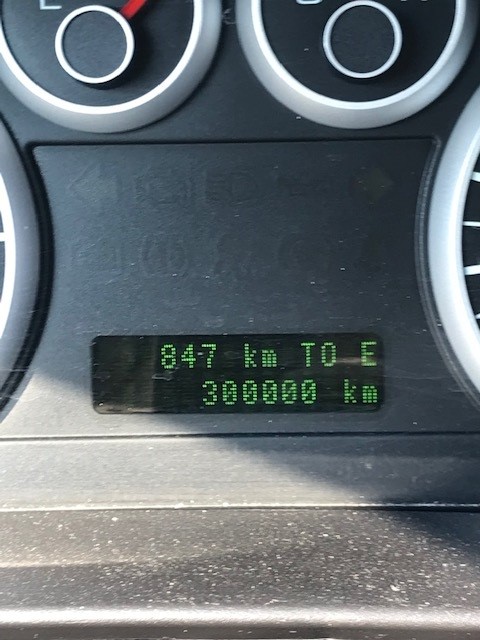
Or you can skip this altogether and do what I do: Drive your vehicle forever – and then another year or so after that. Assuming it’s reliable and you do the maintenance, there is literally nothing that will save you more money. Sure you can skip buying the odd coffee or the bigger dollars by skipping one or two restaurant visits. But nothing comes close to what you’ll save in car payments and depreciation by driving your current vehicle. I know, because yesterday I celebrated my 300,000th anniversary with my 2007 Ford Fusion.
Close To Your Mortgage Renewal? Make a Call To Save $10,000 Or More

There’s another (likely “only”) half a percent rate increase coming at the next Bank of Canada meeting in September. While inflation seems to have peaked, but that’s just an educated guess, our rate increases may not be over until the end of the year.

If you have a mortgage coming due for renewal like I do, it’s not a pleasant thought. However, if your mortgage comes up in the next six months, a number of lenders WILL let you renew if you’re within that six months! That’s what I did last week. My rate is going up 2.4 percent, but that’s better than three percent after the September increase, and any other jump after that. Check with your lender today if your mortgage is up in February next year or earlier! That call may end up saving you over ten thousand dollars!

What’s the rate increase going to cost you? That depends on the rate you currently have. However, a 3% increase on each $100,000 will be $3,000 a year. So someone with a $400,000 mortgage will see their payments go up close to $1,000 a month! What do you get for that? Nothing! It’s a huge increase in your monthly spending for just getting to stay in your home. Yes, it stinks and it’s depressing, but that’s what rising rates cause. Your early renewal will start the following month, so be ready to change your payment budget!

How long should you renew for? That’s up to you. I only ever answer questions as to what I would do – or in this case, what I did. My thinking was that rates will peak sometime next year at the latest. But then it’ll take a while for them to ease downward. Like gas prices, they spike up and take forever to come back down. Even when the Bank of Canada decreases rates, that doesn’t mean the chartered banks will immediately pass that prime rate decrease on. So it didn’t make sense to me to just do a two-year mortgage for that reason. But I sure wasn’t going to sign for five years at these rates as selling or refinancing triggers a big penalty (typically three months or the interest differential – whichever is larger.)

So I picked the kind-of middle option of a three-year term at 5.2%.

While my mortgage is pretty small, I sympathize with anyone who is close to the $400,000 mortgage example about to flush $36,000 of net income down the toilet over the next three years…

Close To Your Mortgage Renewal? Make a Call To Save $10,000 Or More

There’s another (likely “only”) half a percent rate increase coming at the next Bank of Canada meeting on September 7th. While inflation seems to have peaked, but that’s just an educated guess, our rate increases may not be over until the end of the year. (Their next meeting date to likely raise rates again will be Oct.ber 26th.)

If you have a mortgage due for renewal like I do, it’s not a pleasant thought. However, if your mortgage comes up in the next six months, a number of lenders WILL let you renew if you’re within that six months! That’s what I did last week. My rate is going up 2.4 percent, but that’s better than three percent after the September increase, and any other jump after that. Check with your lender today if your mortgage is up in February next year or earlier! That call may end up saving you over ten thousand dollars!

What’s the rate increase going to cost you? That depends on the rate you currently have. However, a 3% increase on each $100,000 will be $3,000 a year. So someone with a $400,000 mortgage will see their payments go up close to $1,000 a month! What do you get for that? Nothing! It’s a huge increase in your monthly spending for just getting to stay in your home. Yes, it stinks and it’s depressing, but that’s what rising rates cause.

How long should you renew for? That’s up to you. I only ever answer questions as to what I would do – or in this case, what I did. My thinking was that rates will peak sometime next year at the latest. But then it’ll take a while for them to ease downward. Like gas prices, they spike up and take forever to come back down. Even when the Bank of Canada decreases rates, that doesn’t mean the chartered banks will immediately pass that prime rate decrease on. So it didn’t make sense to me to just do a two-year mortgage for that reason. But I sure wasn’t going to sign for five years at these rates as selling or refinancing triggers a big penalty (typically three months or the interest differential – whichever is larger.)

So I picked the kind-of middle option of a three-year term at 5.2%.

While my mortgage is pretty small, I sympathize with anyone who is close to the $400,000 mortgage example about to flush $36,000 of net income down the toilet over the next three years…

Sorry Okanagan

One of the top five things I miss about living in the Okanagan is fresh Okanagan fruit. I miss the days of picking cherries, buying strawberries, or being able to get a few peaches at the side of the road.

There hasn’t been a year when I haven’t bought a bunch throughout the summer and fall – until this year. Last week one of the discount grocery chains had Mexico and BC peaches. The prices of the Mexican peaches was half as much as the “local” BC ones.

Yesterday I was at my local grocery store which had a big display of “flyer special” Okanagan cherries. Hurray…or so I thought. This pre-packaged bag of cherries might have been 50 of them – tops.

Fast forward to the checkout cashier a few minutes later. She looked at the cherries – she looked at me – she scanned them through. I thought the “look” was kind of weird but it made perfect sense when I saw $11.65 show up on her screen! WHAT? Take those off, please. Her response was: I don’t blame you – you’re not the first one…

Sorry, Okanagan. I don’t know who is getting the money, but I’m quite sure it’s not the orchard owners! According to the store cashier: Add me to the list of people who certainly can’t afford or justify spending almost 12 dollars for around 50 cherries.

The Travel Troubles Continue

My decision to not go anywhere near any airport this summer is starting to look better and better as flight nightmares continue to get worse and not better.

In July, Air Canada and Pearson airport in Toronto, once again had the distinction of being the airport with the worst delays in the world. Yes, the world! Right now, the average flight delay is longer than the average flight! Just think about that for a minute..

Air Canada seems to be spending more time denying compensation or refunds than they are trying to get back on track. According to a Bloomberg story today, the airline is hiding behind “technical” and “maintenance” issues to avoid refunds that, by law, they clearly owe to their stranded customers.

Last Tuesday Air Canada cancelled a flight from Nashville to Toronto for “technical” reasons. However, flight tracking data showed this exact same airplane, an hour later, flew into Boston. So: Big fat lie on “technical” issues. But it’ll allow the airline to refuse compensation to a ton of people stranded at the Nashville airport.

An even better one was Air Canada’s notice that a flight from Montreal to Lisbon on July 17th would be delayed due to bad weather. Why? Because “bad weather” avoids passenger compensation. One slight problem: They sent this notice TWELVE days before the flight. There are lots more stories, but you get the point.

If you do run into airline “turbulence,” AKA: B.S. your only recourse will be to file a complaint with the Canadian Transportation Agency. But get ready for a one-year wait. I posted my story of attempting to get from Edmonton to Kamloops last November and only got as far as Vancouver in 24-hours. I’ve been awaiting a compensation ruling for nine months without even getting an update from the agency… Hurry up and wait: Whether you’re trying to fly or waiting to get compensated for not flying.

A Happy Financial (Results) Story

Kevin Ford was a single dad with custody of his two daughters when he started working for Burger King in Texas 27 years ago.

Fast forward to last month, and Kevin had remarried and put all (now) four of his daughters through high school and college. All while still working at Burger King and celebrating his 27th year in the same location without ever missing a day of work!

His store (not head office) decided to recognize that achievement with a gift bag: A single (yes, single) movie ticket, some Reese’s Pieces, a Starbucks tumbler, two keychains, two pens and two packages of Lifesavers. Yup – all items left over from previous promotions in a gift bag. By all accounts, Kevin was grateful for the recognition and the gift bag.

His daughter Seryna (and it turns out thousands of others) thought that was a little too little. So, on June 20th, she started a Go Fund Me page for her dad with a goal of $270 for 27 years. That quickly became a goal of $2,700 when she was convinced to change it to $27,000. By that time, the story of her dad had gone viral, and in less than two weeks (as of last weekend) you can add another zero to the goal as the total amount raised has blown by the $270,000 mark!

That’s a great story with a very happy ending. Oh, and Burger King head office or P.R. department? Not a word, comment, PR release or anything…

You May Want to Stay Grounded This Summer

Last night, Air Canada president Michael Rousseau announced that the airline would be making significant flight cut-back starting tomorrow and extending through the summer.

WHAT? Yes, like other airlines, they aren’t close to ready for the resumption of 2019 passenger volume and demand with a shortage in every position from call centres to pilots. That’s resulting in massive quantities of delays and flight cancellations. To help (not solve) the issue, airlines are reducing their flight schedule to match their current staffing levels. The alternative is the continuous chaos and massive delays experienced across North America every day. Last weekend, the hold time to contact Delta Airlines just to re-schedule a cancelled flight was 697 minutes. Do you have a cell plan or battery or the patience to sit at an airport and stay on hold for over 11 hours?

In May I thought I’d be able to resume my annual summer week in Phoenix. When I check a random week in August the airfare was double and a sub-compact car rental was quoting at $450! $1,100 just to get there and to get around? No chance. And don’t kid yourself: Economics 101 is that fewer flights mean (even) higher prices. And Westjet will immediately match (increase) their ticket prices to the same levels.

In the U.S. the airlines are hoping to get closer to some kind of reasonable normal by Thanksgiving. That’s in October! Be ready for a lot more pain, cost, and hassle with airline travel for some time to come. Or join me in sticking with staycations for this year…

Hang On a Few More Months

If you’ve been thinking/wanting/needing a new or newer vehicle – hang on a bit longer. If you’ve bought one in the last year – sorry: You overpaid a lot – I mean a lot! If you didn’t have a choice, your only hope is to keep the vehicle for a long time: The old saying: Drive it into the ground.

For those who waited, there are already small price reductions and more to come. For both new and used vehicles, relief is on the way if you hold on until the fall. As inventories for new vehicles grow, the prices will drop with more supply and less demand. 20 of something on a dealer lot and tens of thousands coming out of the factory is going to soften prices pretty quickly.

It’ll then reduce used vehicle prices in tandem. The first ones will be the dealership used cars. It will take another 90 days or so for the private sellers to get a reality check that their ‘yesterday’ price is no longer realistic. Many will try – few will get a buyer and then those prices will also adjust. Just make sure you don’t pay attention to the Auto Trader recommendations of “good deal” or not!

Before you start shopping (and then financing your purchase), however, read the Money Tools & Rules chapter on car buying. A $20 book and a 10-minute read, just in that chapter, is potentially going to save you thousands of dollars!

When You’re In Charge of Your Own Retirement Finances

We talk about finances all the time, and one of the biggest financial decisions is probably your retirement savings. That’s more critical when you’re older but way easier to accomplish when you’re younger. Now, this is not a shot against the current government, but a comment about government programs overall.

There are a few things the government does really well. Included in that list is the military, foreign affairs and the passport office which is just incredibly efficient and well-run. But generally, any government programs are not very effective, and you will always be able to do better, and do more on your own, without waiting or hoping the government will come to your rescue. They won’t – and by the time you’re done waiting for a bailout package, or meaningful help from the government – you’ll be dead, honestly.

There is no place where that is clearer than with our Canada Pension Plan: The CPP pays a maximum of $884 to you in retirement. Let’s use this $884 maximum, even though the average pension benefit recipient gets $481.

Let’s take the lowest working person in the country. We’ll take someone who works from age 18 to age 65 and makes $2,000 a month. So this is a person who never gets a promotion, never gets a raise, and never improves on that income – someone who literally makes a small $2,000 a month throughout their entire working life.

Until retirement, every month, this person has $42.28 deducted from their pay towards CPP. The employer portion is the same, because employers match the deduction. So, for this person, every pay period, $84.56 goes towards their CPP in order to get a maximum of $884 each month after retirement. Simple math so far?

Now, if this person took that same $84 a month and invested it, at a 10% return over their lifetime, they would have $1,084,000! That translates to a monthly pension of $9,033! Let me say that again: Taking the same CPP deduction of someone who makes $2,000 a month for life, and investing it on their own, would have a pension of over $9,000 a month, AND he or she would leave an inheritance of over $1 million to their family.

THAT is why I want you to pay yourself first every month, and have some savings deducted right off your pay where you won’t miss it. What would you rather have? The $884 CPP, or your own $9,000 each month?